Herndon’s historic center grew around the railroad depot and the dairy farms that once shipped milk to Washington. Today the depot anchors a commercial core surrounded by older residential streets, with many houses dating from 1890 to 1920. A 1917 fire shaped much of the commercial area that survives, while the local historic overlay guides changes to designated properties.
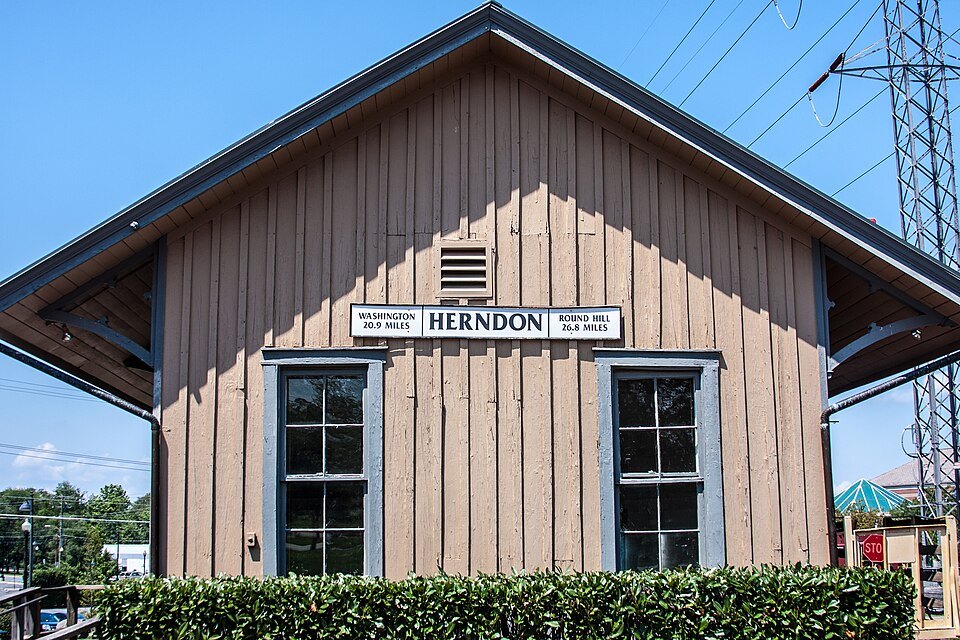
Herndon Depot, photographed in 2012; a landmark in the town's historic center.Photo: Cecouchman · CC BY-SA 3.0 · Resized and JPEG-optimized for display; no content changes.
The historic center and surrounding streets
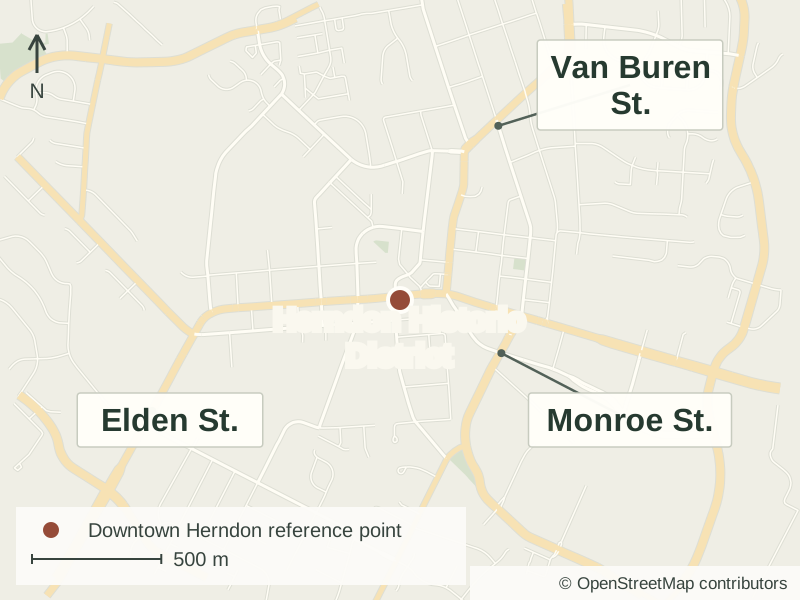
Historic downtown Herndon is centered around the depot and the W&OD Trail.
The dot marks downtown Herndon, rather than a historic-district boundary.
The Herndon Historic District covers the town's historic center in western Fairfax County. The community grew around the railroad, which reached Herndon by 1859, and later became a shipping point for local dairy farms.
The depot remains a central landmark and houses a museum operated by the Historical Society of Herndon. The Town of Herndon publishes separate guidance for properties within its local Historic District Overlay.
Walking routes and property references
Two starting points for exploring the historic center and looking more closely at an individual property.
A self-guided walk from the depot
The east walking tour starts at the depot and passes homes and buildings in the Historical Society’s plaque registry. A separate west tour explores other streets, and the brochure includes town historical markers. The routes use public streets and sidewalks; the homes remain private.
The town’s preservation page links its local Historic District map, property list, process guide and modification form. Town staff use the proposed work to determine whether review is exempt, handled by staff or referred to the Historic District Review Board. Start with these local resources for a particular address.
The settlement received its name in 1858 in honor of Captain William Lewis Herndon of Fredericksburg. He commanded a packet ship that sank off Cape Hatteras the previous year.
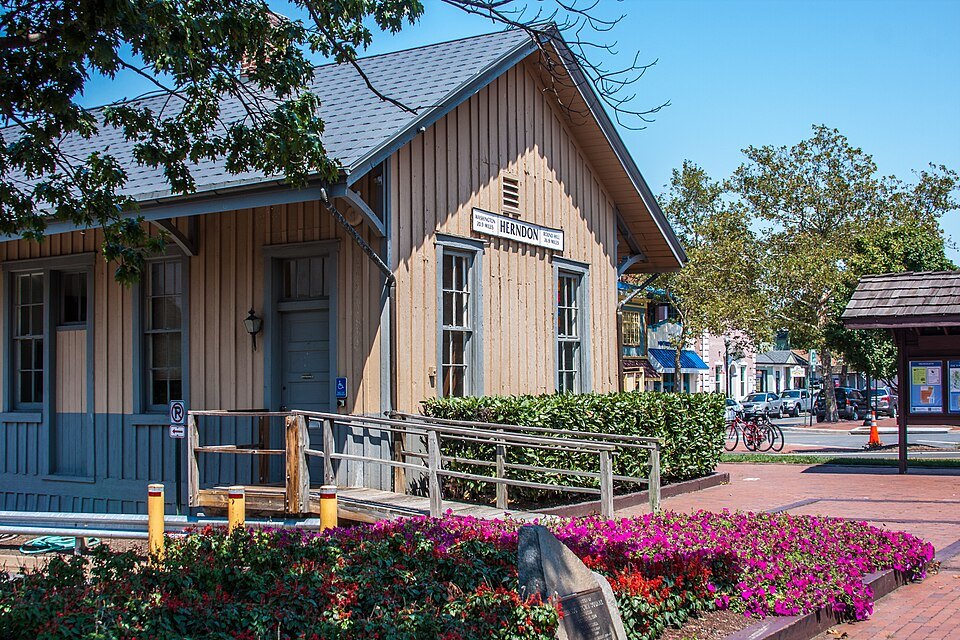
After Herndon's incorporation in 1879, the first town council meetings were held in the depot. The building later housed town offices before becoming a museum, giving it a civic history as well as a railway one.
Eleven local women founded the Fortnightly Club in 1889, meeting once every two weeks to study. Their collection grew into a public library. The present branch keeps the name in recognition of the club's long volunteer service.
Another view of the historic Herndon Depot, photographed in 2012.Photo: Cecouchman · CC BY-SA 3.0 · Resized and JPEG-optimized for display; no content changes.
Older homes and the local historic overlay
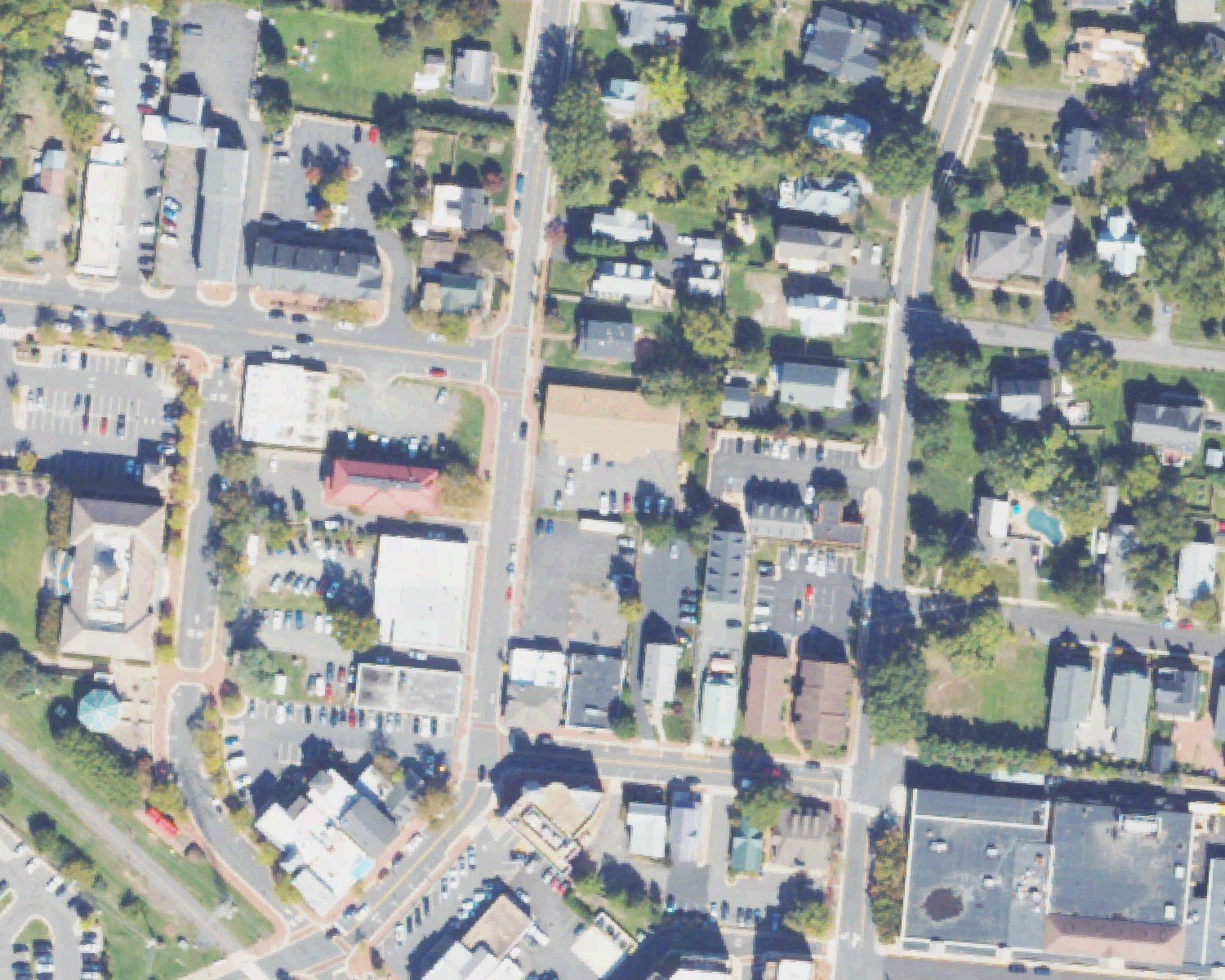
The historic district includes modest houses from several building periods, with many built between 1890 and 1920. Residential streets retain a range of house forms rather than one consistent architectural style. The local Historic District Overlay distinguishes contributing and noncontributing buildings; the Town’s address-based map identifies which designation applies to a property.
Aerial photograph: homes around Lynn and Pine streets in Herndon’s historic center. NAIP imagery acquired October 11, 2023. The photograph shows conditions at that time.Photo: USDA NAIP / USGS The National Map · Public domain · Resized and JPEG-compressed for the web; no scene elements altered.
This search covers the broader Herndon area. The listing service does not provide a separate historic-district filter.
Questions about the historic district
What is the depot used for today?
The depot houses a museum operated by the Historical Society of Herndon, preserving the building’s railway and civic history.
Where can I check the local historic overlay?
Use the Town’s Historic District map and address search. They distinguish properties within the local overlay and identify contributing and noncontributing buildings.
Where did the commercial center's buildings come from?
Much of the historic commercial area was rebuilt after a fire in 1917, so its buildings tell a different chapter from some of the surrounding older houses.